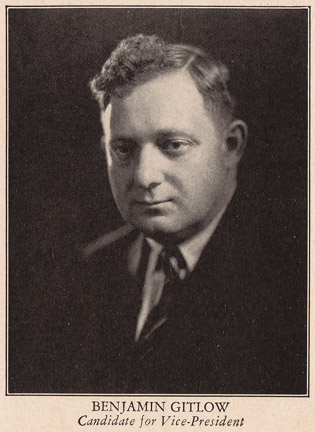
Benjamin Gitlow was born into a family of radicals. He was one of the original founders of the American Communist Party, and his name was forever linked to civil liberties history when he was arrested and spent time in prison for a free speech case. In 1929, Gitlow was expelled from the Party after a heated debate he had in Moscow with Stalin. After moving around to various socialist organizations, he eventually abandoned Marxism altogether and became a vehement anticommunist.
Gitlow wrote several anticommunist books. In 1939, he published I Confess. In it he wrote about Juliet Stuart Poyntz and her involvement in the Lore controversy, but he mentioned no details about her disappearance. Anticommunism was not very lucrative until after World War II. Then in 1948, Gitlow published The Whole of Their Lives and suddenly he not only knew about what happened to Poyntz, but he made it appear he even knew what the killers were thinking. Anticommunism was now popular and Gitlow hoped to cash in. Unfortunately for him, his book did not garner much attention, especially since other anticommunists like Whittaker Chambers were capturing headlines.
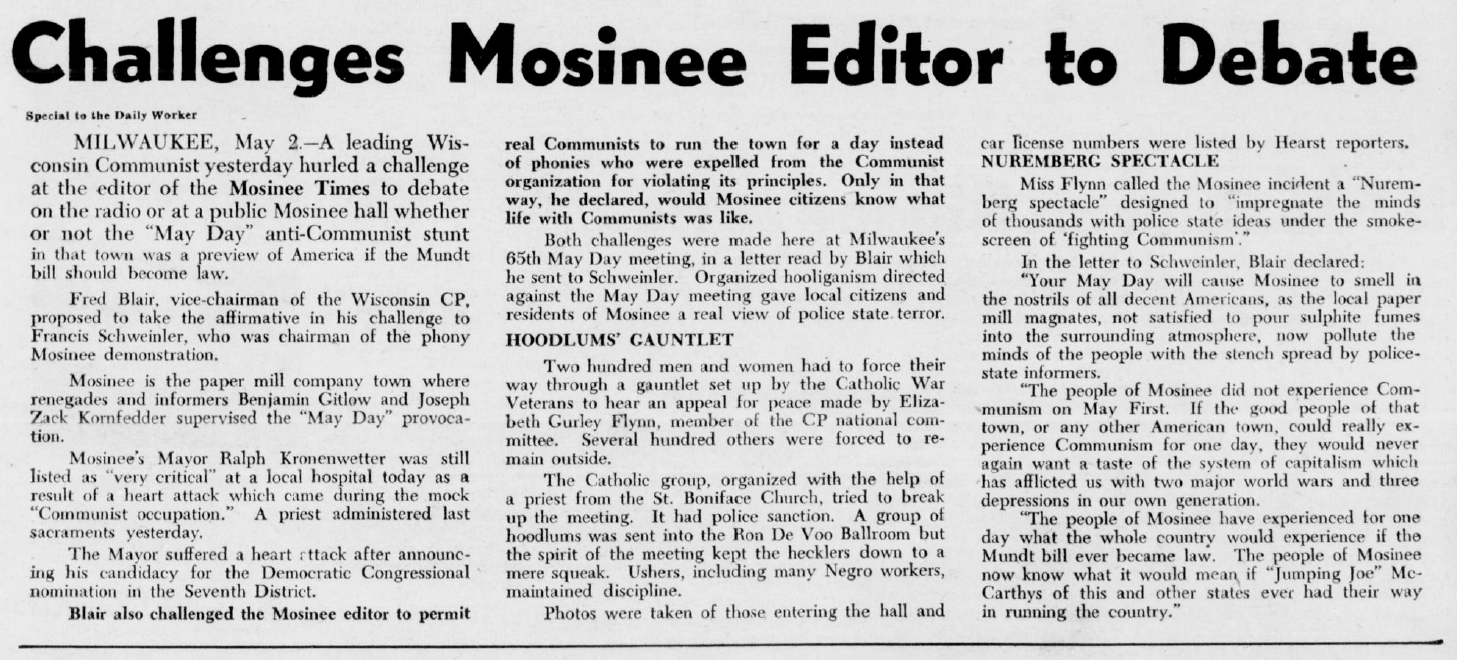
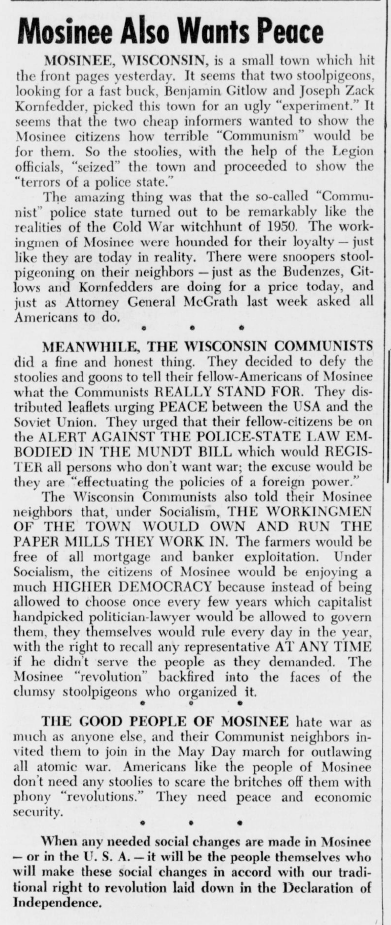
His books failure did not dissuade Gitlow who participated in perhaps one of the biggest anticommunist spectacles of the time. On April 20, 1950, Gitlow, along with former communist Joseph Kornfeder participated in a mock communist revolution in Mosinee, Wisconsin. The town staged a 48 hour communist revolution taking town leaders into custody and holding them in outdoor camps and serving bland Russian food in restaurants. The Communist Party reacted immediately calling the stunt a farce coming from a sundown town. Whether Mosinee had a sundown law or not is not clear but in its 1950 census there were no Black residents. In an article on the event, Gitlow engaged in typical anticommunist stereotypes warning that women in particular were susceptible to communist propaganda. The event was declared a success, but in its wake two of the town officials who were under fake arrest, a minister and the mayor, both died. The mayor suffered a stroke during a bonfire where locals celebrated the end of the revolution.
Benjamin Gitlow remained a vehement anticommunist until his death in 1965.
 Denise Lynn, Ph.D.