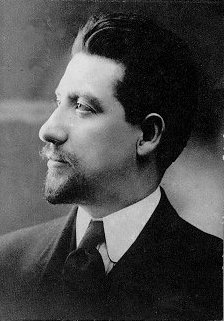
Carlo Tresca might be the only reason we know about Poyntz’s disappearance. An Italian anarchist, Tresca was devoted to ending capitalism and giving working people a chance at a fulfilling life, but by 1937, he was also a committed anti-Stalinist. Anti-Stalinists were a small group of people that believed Josef Stalin had destroyed the revolutionary potential of communism. Unwittingly, anti-Stalinists, many of whom like Tresca were left-wing activists, helped to lay the foundation for Cold War anti-communism that would undermine the American left.
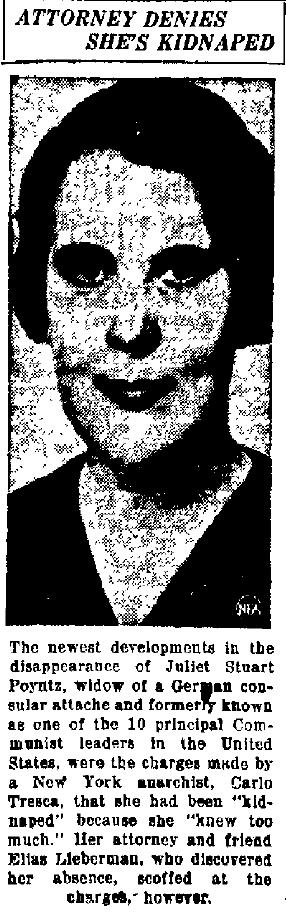
Tresca had lost his faith during the Spanish Civil War when Stalin sent agents to assassinate his critics in Spain, this was part of the Great Purge. His henchman George Mink became his trigger man and Tresca claimed that Mink was involved in Poyntz’s disappearance and presumed execution. In February 1937, Tresca went before a grand jury and made accusations against Mink and others associated with the Communist Party, including Schachno Epstein.
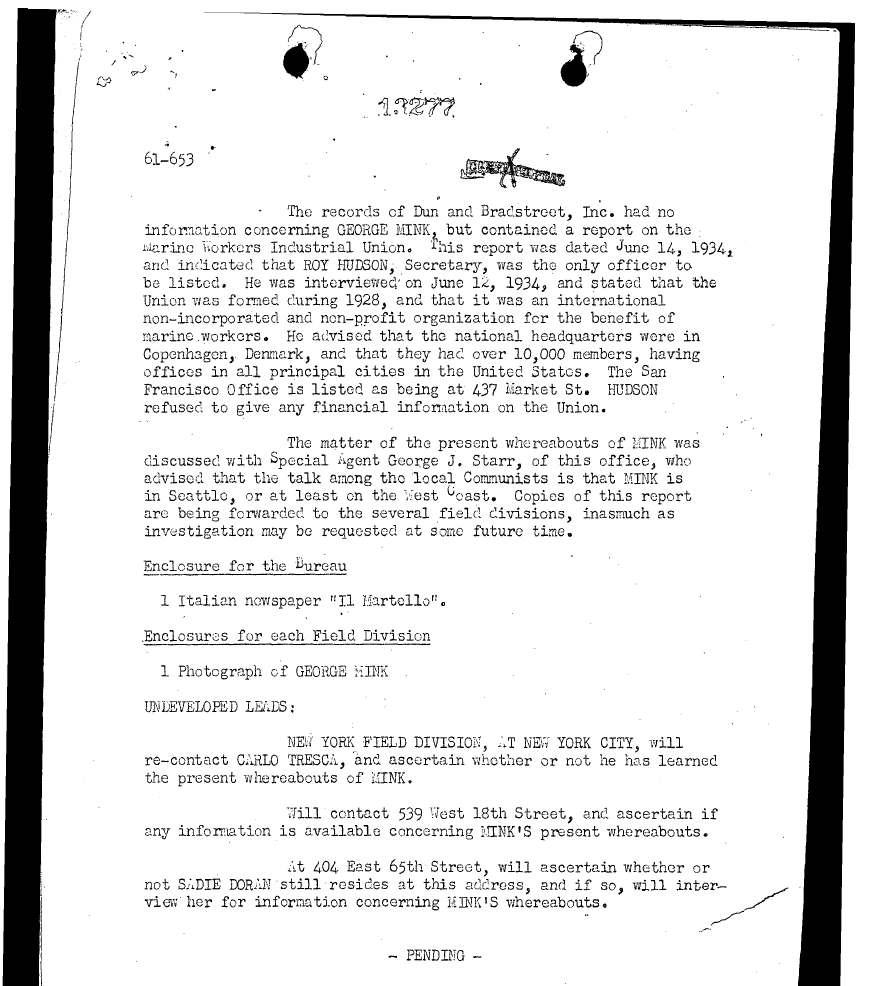
As soon as Poyntz’s disappearance was announced, Tresca became very vocal blaming Soviets and American communists, including George Mink. But the FBI paid little attention in 1937 as evidenced by Mink’s FBI file. The Bureau also had an extensive file on Tresca starting in 1922. But between 1929 and 1941 the Bureau’s file is silent. It appears that the FBI was not worried about a missing American woman. Tresca became angrier with the communists believing that they had killed Poyntz, he began to provide the FBI with information as evidenced in the George Mink file document below:
Tresca aired his suspicions about the Communist Party and its involvement in Poyntz’s disappearance in a March 1938 article titled “Where is Juliet Stuart Poyntz?” Though he had no evidence, Tresca would spend the remainder of his days blaming the Communist Party for her disappearance. He had many theories, not all of them were aired in public, but Poyntz’s disappearance pushed Tresca further toward anti-Stalinism. He was assassinated in 1943 in front of his newspaper office in New York City. Some of his friends believed that communists had him killed, but his biographer Nunzio Pernicone wrote that the New York police had a likely suspect that was linked to the local mafia, but not enough evidence to convict. The story that Tresca constructed about Poyntz’s disappearance took on a life of its own and was repeated as late as 2018. Unbeknownst to Tresca, his insistence that Communists killed Poyntz laid the foundation for American anticommunism and undermined the power of the American left to make permanent progressive change.
 Denise Lynn, Ph.D.