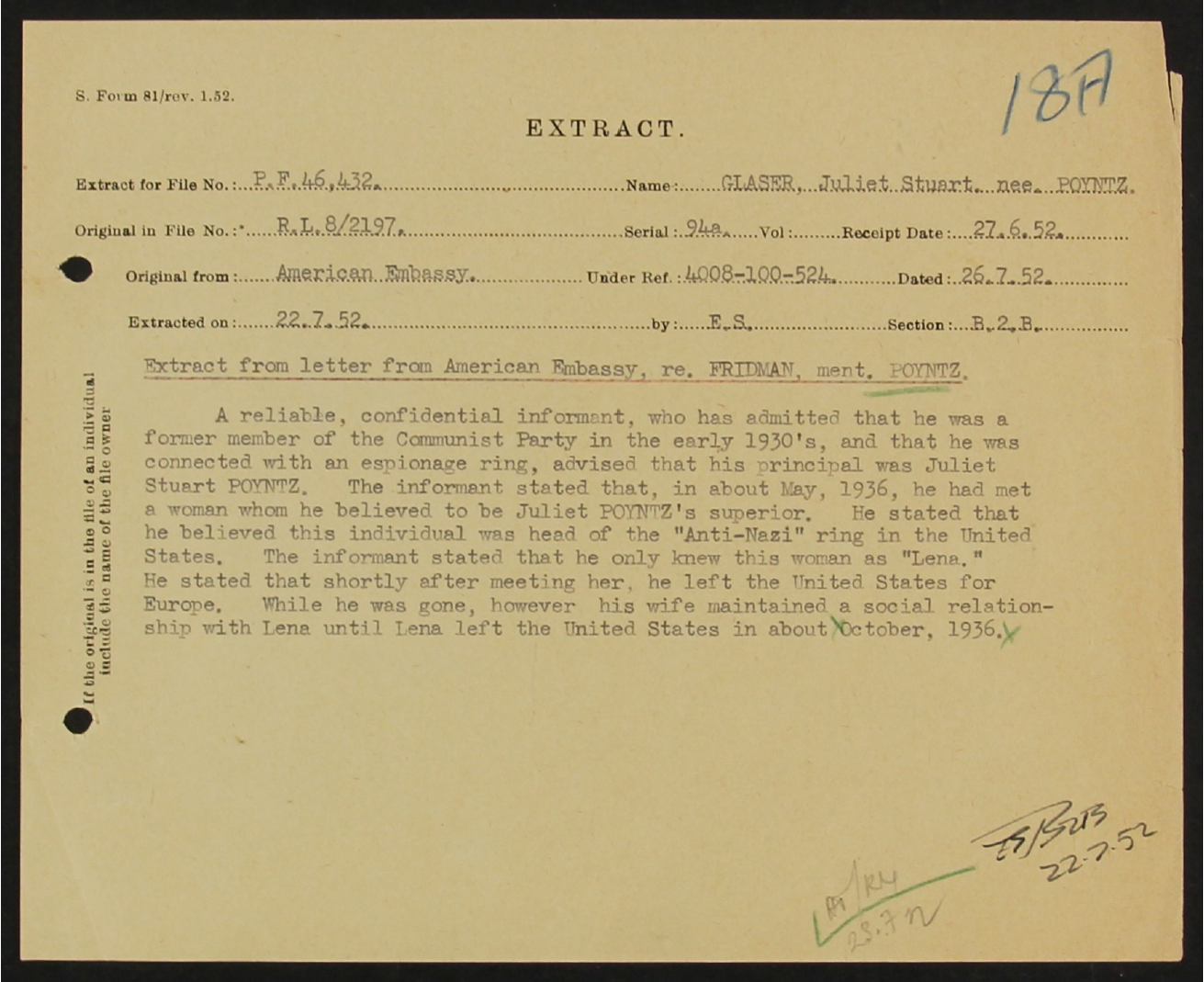
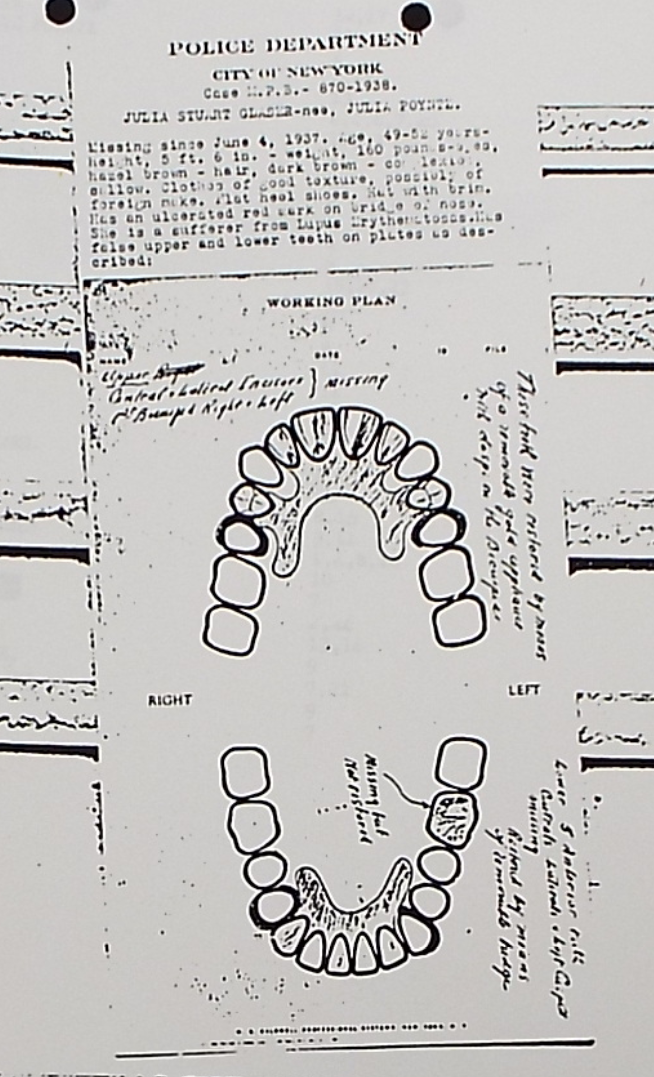
 Neither state nor federal law enforcement seemed to care when Juliet Stuart Poyntz went missing. At the same time, neither the FBI nor the New York State police have been forthcoming in sharing documentation on their investigations. In 2005, I requested Poyntz’s missing person’s file through a Freedom of Information Legislation request (FOIL) to the City of New York. Initially, I was told that there are some documents but they need to be processed, there was no follow up. In 2010 I put in another request and was told there were no documents, then I appealed based on the earlier letter and was denied again.
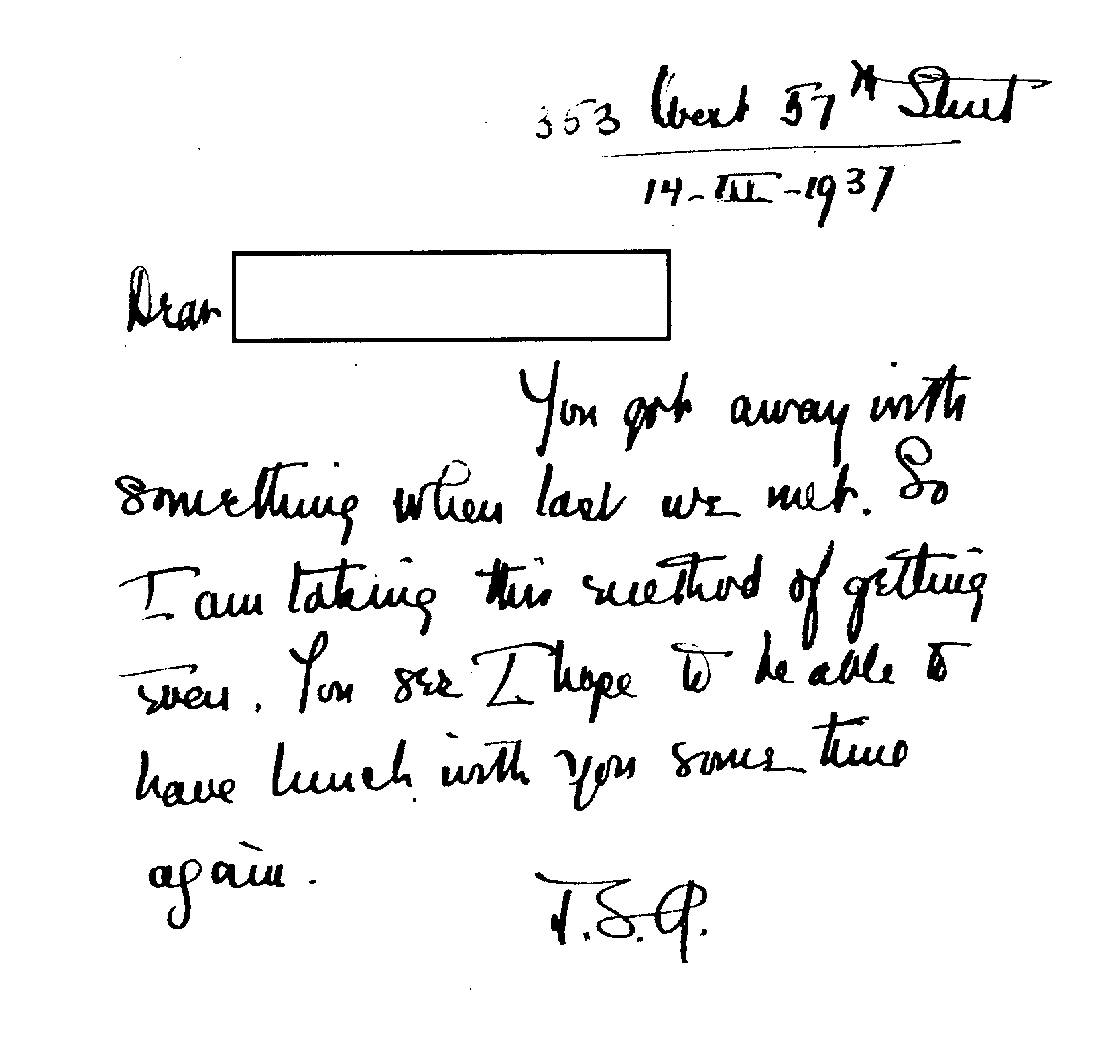
I also requested Poyntz’s FBI file; one would imagine that if an American citizen went missing and people close to her claimed she was a spy, the FBI would have been interested. Unfortunately, all that they released was a 13-page report on a handwriting analysis. The analysis was done at the request of New York State authorities in 1944 to see if Poyntz was still engaged in espionage – seven years after she disappeared.
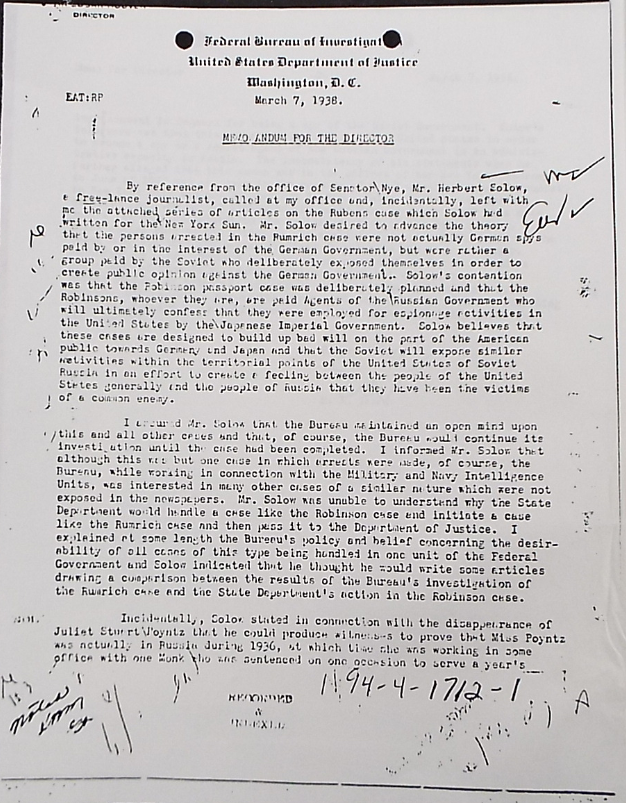
I later located the entire FBI file which was located in the Harvey Klehr collection at Emory University. The FBI may not be eager to release it since it shows the agency took little to no interest in the case until it benefitted them. Her file between 1937 to 1940 is short and includes information Herbert Solow shared with the agency and calls he made to urge it to investigate. It also includes letters from James O’Neil, the editor of the anti-Stalinist newspaper New Leader asking about whether the FBI planned to investigate the disappearance. He was informed that the FBI did not have jurisdiction. The remainder of the file is from the Cold War period when the FBI was tasked with finding and punishing communists; Poyntz became a useful tool. Thus the Bureau was only interested when she served its purposes.
The FBI file is available here.
I filed an additional FOIA request for her files in 2020 just to see the response. The Bureau indicated that some or all of her file was destroyed or may be at the National Archives and Record Administration – I am currently awaiting a response from NARA.
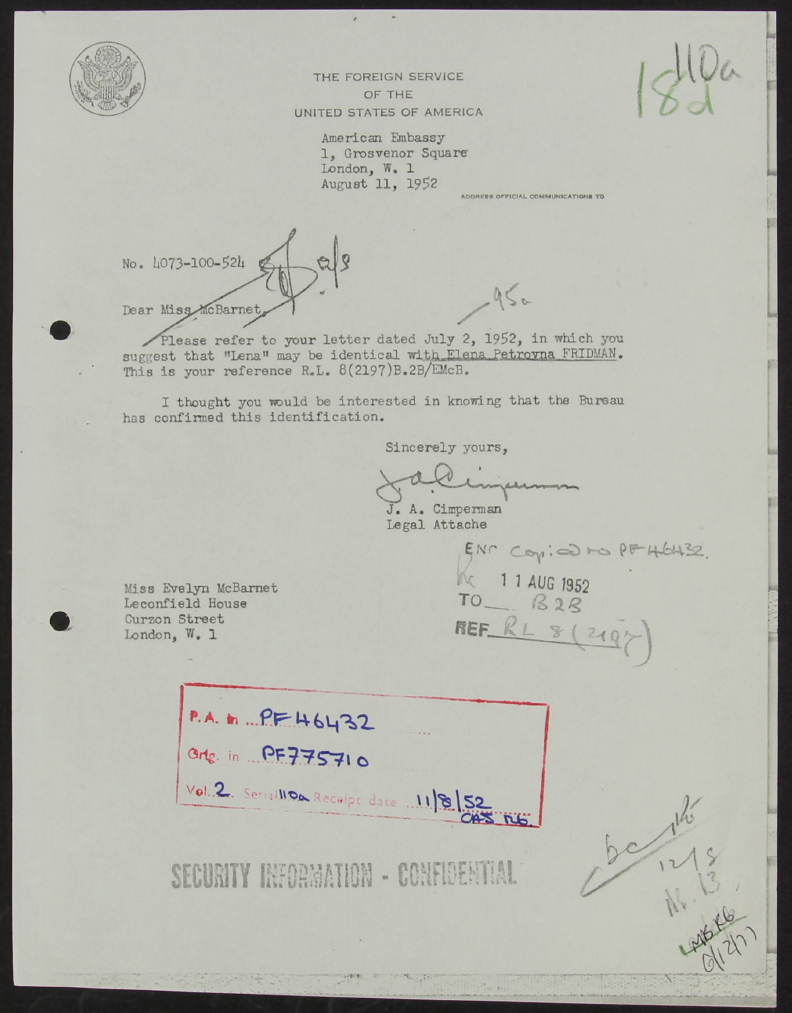 British Intelligence also had a file on Poyntz. One of the things that both intelligence agencies were focused on was the strange character Lena. Lena, known by several names might have been Poyntz’s handler, or might have kept an eye on her. Dorothy Gallagher wrote a description of the unusual relationship between Poyntz and Lena. Lena was likely a Polish dental student in the United States as part of Poyntz’s spy ring. She helped Poyntz recruit people to travel to Europe to collect information on the Nazis. But Lena had some problems of her own, she tried to commit suicide in Chicago. For some unknown reason when that failed she traveled to the East Coast on a train; she exited the train in rural Pennsylvania and was found by a family on their farm. They took her in, but she once again tried to kill herself by shooting herself in the head. She failed again and Poyntz found a friend to look after her, primarily
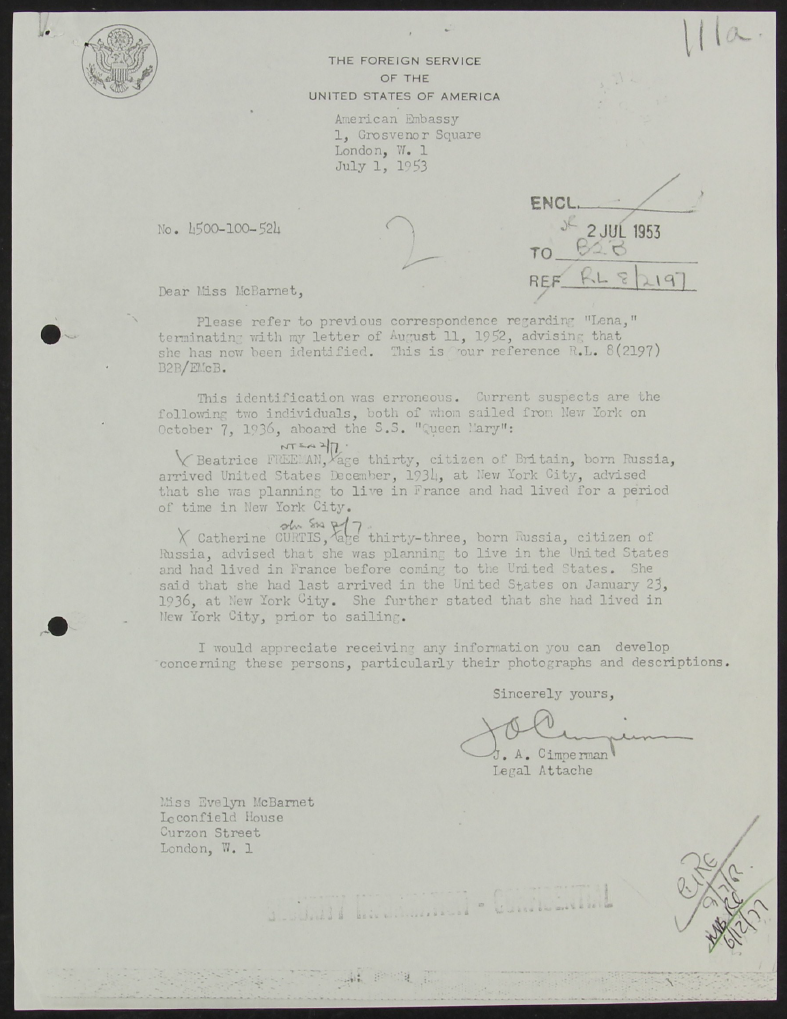 because Lena would fly off into a rage every time she saw Poyntz. Its not clear what happened between the two women, but some speculated that Lena was responsible for luring Poyntz to her death. This is an odd conclusion given how bad their relationship seemed to be. But both the FBI and British Intelligence worked to identify her. Interestingly, neither agency looked until the Cold War, because by then they were suddenly interested in Poyntz’s disappearance.
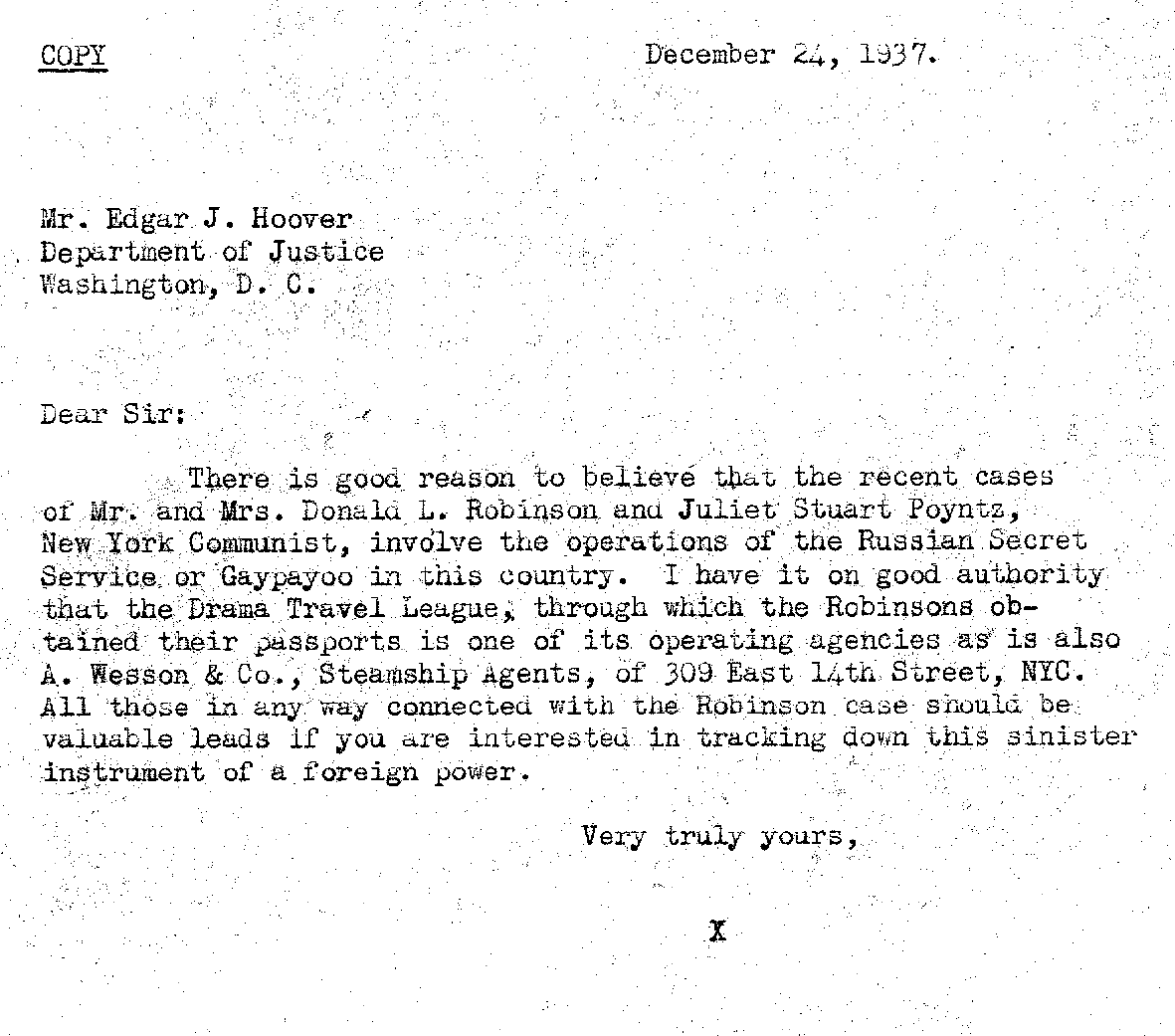
In the National Archives files there are two informant letters originally sent to J. Edgar Hoover about the Robinson-Rubens case and Poyntz. One of the letters was sent to Hoover on Christmas Eve 1937 claiming that Poyntz was kidnapped by the Soviet Secret Police. The other letter was from a gentleman who believed he had seen the Robinsons-Rubens in Spain. Hoover forwarded the letters to the Department of State washing himself of the cases.
The lack of interest in Poyntz’s disappearance in 1937 is remarkable because after World War II the FBI spent a great deal of its time identifying and harassing communists. Poyntz’s file suggests that the Bureau used information on her to identify people who were once associated with the Communist Party. Apparently, a missing communist woman was not particularly important until she could help the Bureau harass people.
 Denise Lynn, Ph.D.